
Your Child's First BJJ Class
What you'll actually see when your kid walks onto the mat at Golden Jiu Jitsu.
You signed your child up for a class. You're probably wondering what's going to happen in there. Here's what the experience looks like from the sideline, start to finish.
Last updated April 2026
A note on photos: we don't photograph children during training. It's a privacy protection for every kid in the gym, so the photos on this page show our adult classes.
When You Walk In
Come in about 10 minutes early. A coach will greet you and your child at the door, show you both around (changing rooms, bathroom, shelves for backpacks), and walk your child onto the mat when they're ready.
Before class starts, the coach will sit with your child and explain three things: how class works (a warmup followed by several games), how class ends (everyone lines up on the wall for a bow and high fives), and what tapping means. For Little Lions (ages 4-7), tapping is explained simply: "If you feel scared, squished, or just want to stop, tap. When someone taps you, let go right away." For Golden Tigers (ages 7-13), the explanation goes a bit deeper into how tapping relates to submissions.
Then comes something most gyms don't do. For the first game, your child will sit with a coach and watch one full round before joining in. The coach will point out how everyone is moving, ask your child to spot who looks safe and smooth, and talk about what it means to be a good training partner. Then they'll be paired with a hand-picked partner and jump in.
Athletic clothes
Anything they can move in, with no pockets, zippers, or velcro.
Water bottle and flip flops
Flip flops or slides for the bathroom. If you don't have the right gear, we have loaners at the gym.
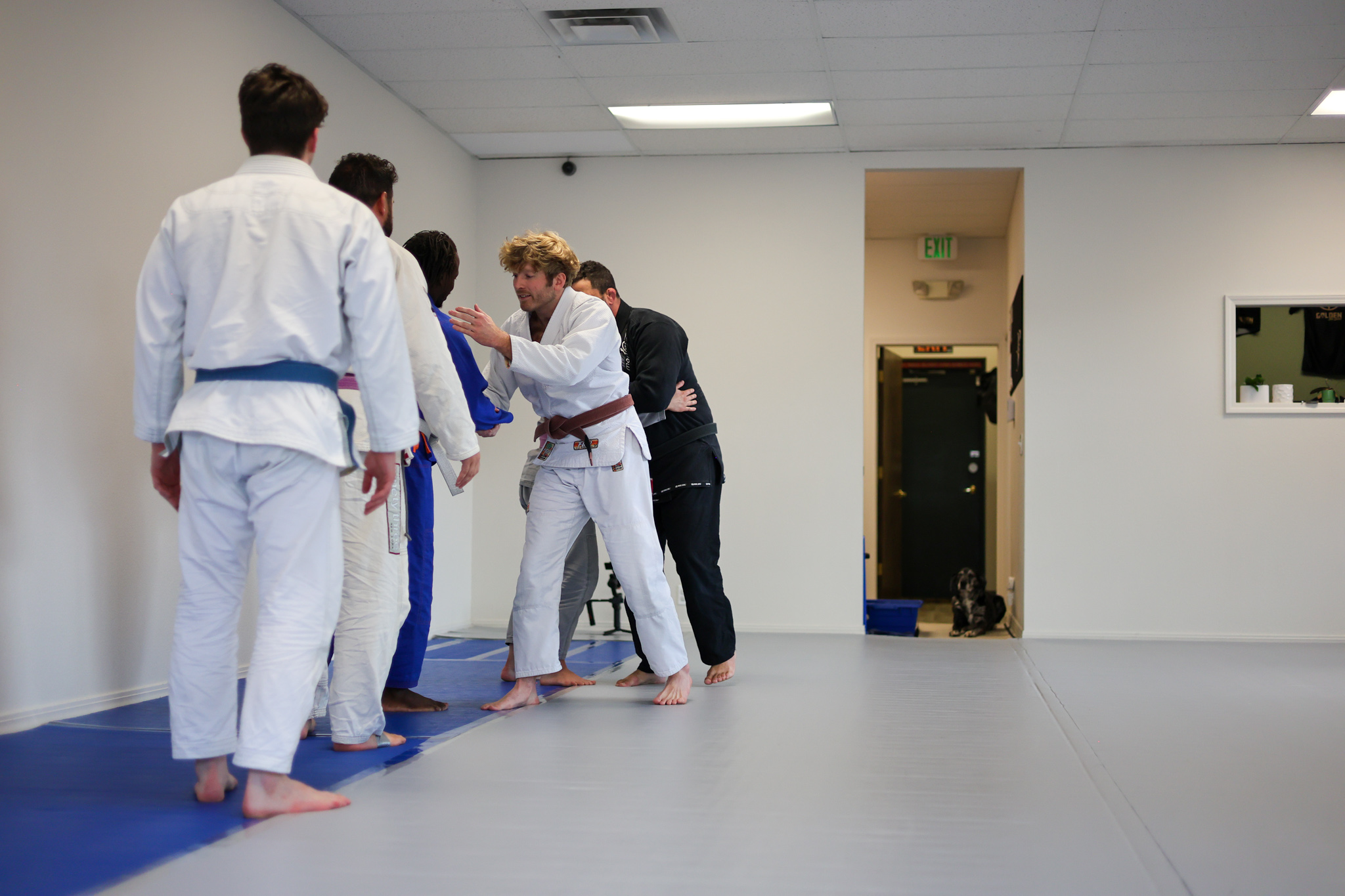
Your child won't be thrown into anything cold
Before class, the coach walks your child through how the games work, what tapping means, and how class ends. They watch a full round from the sideline with a coach before they play. By the time they join in, they know what's happening.
What You'll See During Class
This is where most parents' nerves kick in. Here's what you'll actually see, and what's really happening.
It might look chaotic. Kids will be moving in different directions. The room will be noisy. There won't be any lines or synchronized movements. This is not chaos. Every pair of kids is playing a structured grappling game with specific rules, starting positions, and win conditions. The coach is watching the whole room, adjusting difficulty for individual pairs, and stepping in when something needs correcting. The structure is in the games, not the formation.
Your child will probably lose. A lot. This is expected, and it's by design. The games are built so every kid gets reps on both sides of winning and losing. Losing is where most of the learning happens, because losing forces kids to try something different. A child who wins every round isn't being challenged enough. A child who loses and resets and tries again is learning.
It might not look like martial arts. Especially for younger kids, class looks more like structured play than a traditional martial arts program. There are no uniforms, no choreographed forms, no standing in rows. That's intentional. Grappling concepts are embedded in the games. Kids develop coordination, decision-making, and real grappling instincts through play, not through repeating movements on command. The precision comes later.
You might see tears. Getting pinned, losing a game, or feeling frustrated when something doesn't work brings big emotions, especially for younger kids. This is normal and it happens to most children at some point. When it does, the coach handles it. They'll check in, offer a water break, give your child space to come back when they're ready. Working through those feelings on their own (with a coach nearby, not a parent rushing in) is one of the most important things this program builds. Every time your child sits with a hard feeling and comes out the other side, they get a little stronger.
Your child might sit out a round. That's completely fine. There's no pressure and no judgment. Some kids need a break to watch, reset, or just catch their breath. Most kids who sit out one round are back in the next. If they sit out a few, the coach will check in with them and see if something needs adjusting.
Safety is built into every class
Coaches assign training partners rather than letting kids self-select. The main variable is timidity level: timid kids are paired with timid kids, and kids who want to go hard are paired with kids who match that energy. Coaches actively monitor intensity during every round and step in when something is mismatched. For Little Lions (ages 4-7), there are no submissions of any kind. Period.
What Helps Your Child Most
The single most helpful thing you can do during class: let the coach handle it.
We know how hard it is to watch your kid play a game they're not winning. We know the instinct to call out advice, correct their position, or step in when they're frustrated. That instinct comes from a good place. But acting on it makes things harder for your child, not easier.
Sideline coaching increases pressure. It pulls your child's attention out of the game and onto you. It frames every moment as winning or losing. And it prevents them from learning to solve problems on their own, which is the skill that matters most.
When your child is struggling in a round, the coach is already watching. They know what's happening. They're deciding whether to step in or let your child work through it. That judgment call is part of the training, and it's based on years of watching kids learn to grapple.
The same goes for behavior. If your child is playing around or not paying perfect attention, that's usually fine. We expect kids to be respectful, but not serious. We're playing a game. If something needs addressing, the coach will handle it.
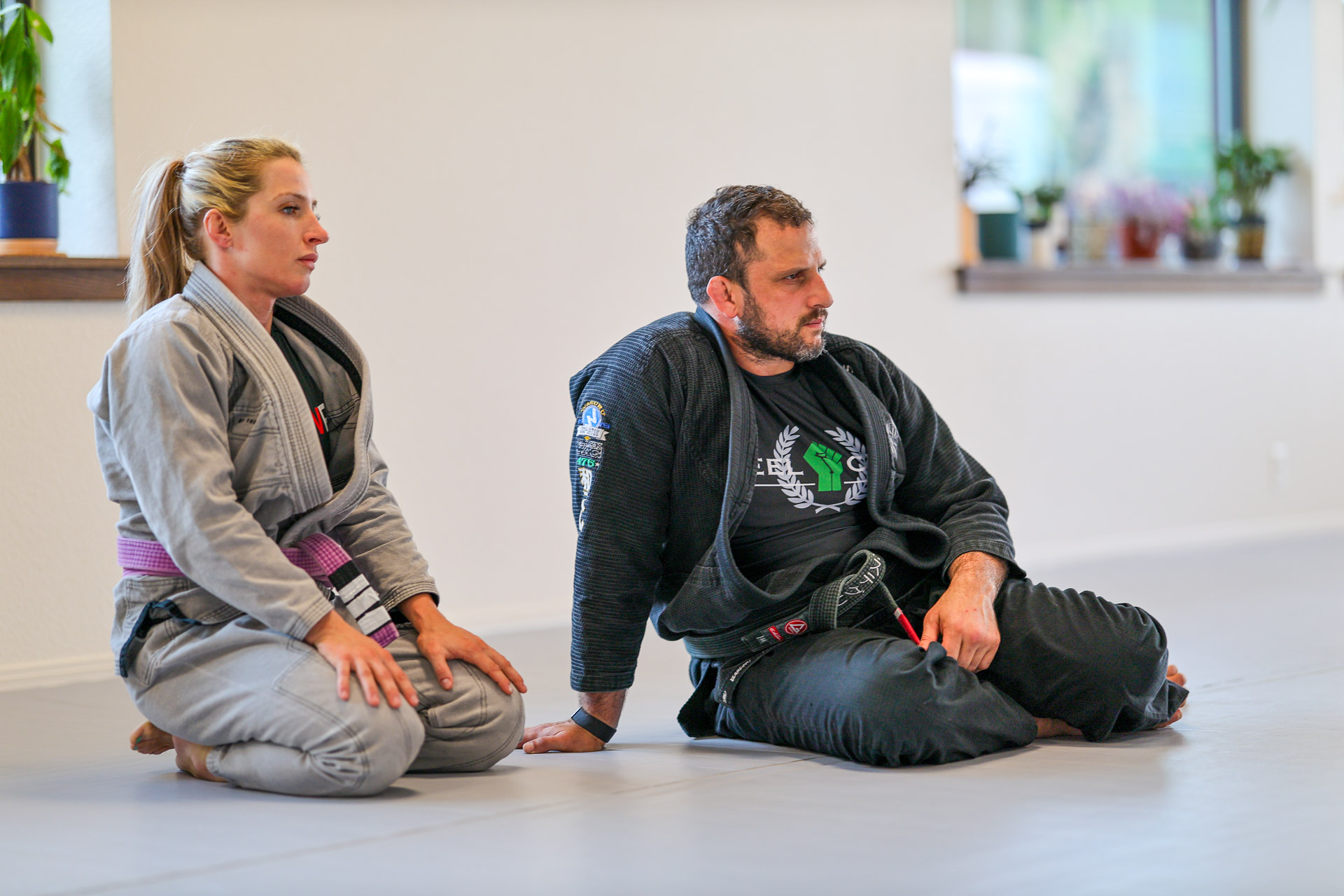
This is the real skill we're building
Every time your child works through a hard moment on their own, they get a little more resilient. That's the real skill we're building, and it only works if they get to do it themselves.
After Class
A coach will check in with your child after class and ask if they had fun. Then they'll come find you to answer any questions about the program, your child's experience, or what you saw from the sideline.
When you talk to your child about class, the questions you ask shape what they think matters. "Did you have fun?" and "What games did you play?" keep grappling framed as play. "Did you win?" or "How did you do?" turn it into a performance review.
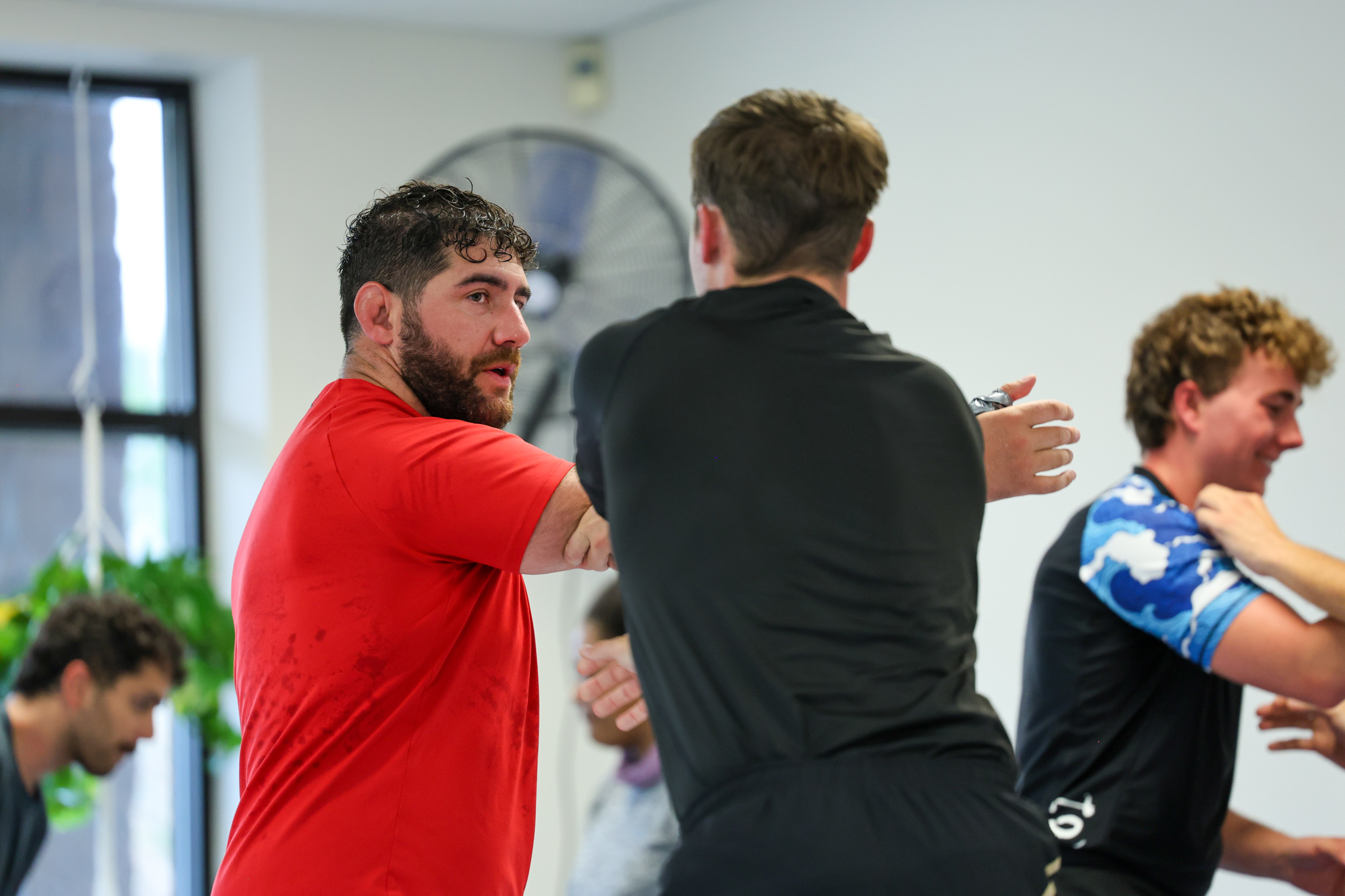
Parenting tip
Ask "What games did you play?" instead of "How did you do?" The first question keeps grappling fun. The second turns it into a performance review.
The First Few Weeks
The first class usually goes well. The novelty carries your child through. It's the next few weeks that are harder.
Somewhere around class two through six, the excitement fades. Your child might say they don't want to go back. They might say it's boring, or too hard, or that they don't like someone. This is a normal part of the adjustment period, not a sign that something is wrong.
What's actually happening is that the easy part is over. Your child is in the part where they have to show up, try hard, lose, and keep going. That's uncomfortable. It's supposed to be. And it's where the real development starts.
A child who resists going but is fine once they're there is in a normal adjustment phase. Give it at least a month of consistent attendance (two to three classes per week) before drawing conclusions. Most kids who push through the early resistance end up loving it.

If your child says they don't want to go back
After class two or three, that's not a sign it isn't working. It's a sign the novelty wore off and the real learning is about to start. Keep bringing them. The kids who find their people and start to feel competent in the room are the same kids who asked not to go on the drive over.
Still Have Questions?
Is grappling safe for kids?
Yes, with caveats. Grappling has real physical contact, and that means occasional bumps, bruises, and mat burn. But it doesn't mean broken bones or head injuries. The tap system keeps everyone safe: when someone taps, everything stops immediately. For Little Lions (ages 4-7), there are no submissions of any kind. For Golden Tigers (ages 7-13), submissions are introduced carefully based on age, size, and experience.
What if my child had a bad experience at another gym?
We hear this more than you'd expect. Our approach is different from most gyms. We teach through games, not drills. There's no forced sparring, no line-up-and-repeat, and no punishment for losing. For new kids, we do an observation round before they participate, pair them with a hand-picked partner, and let them go at their own pace. If your child has specific concerns, call the gym and talk to the head coach before the first class so we can set things up well.
What age can kids start?
Little Lions starts at age 4. Golden Tigers is for ages 7 through 13. The two programs are designed differently. Little Lions is weighted heavily toward physical literacy, social skills, and fun. Golden Tigers adds more structure, complexity, and grappling depth.
Do you separate by size?
Coaches assign partners based on timidity level, size, and skill. The main variable is timidity: timid kids are paired with timid kids, and kids who want to go hard are paired with kids who match that energy. A timid kid paired with an aggressive one is a bad experience for both of them, and our coaches know that.
What if my child cries during class?
That's normal, especially in the first month. Getting pinned, losing, or feeling frustrated brings big emotions for kids. When it happens, the coach checks in, offers a water break, and gives your child space to come back when they're ready. You don't need to step in. If something needs your attention, the coach will come find you.
Want to Know More?
Totally optional. Just if you're curious.
The First Month
What's normal during your child's first few weeks, and when to relax.
Is Grappling Safe for Kids?
The honest answer, covering the tap system, injury reality, and coach monitoring.
It's Just a Game
Why treating grappling as play is the best thing you can do for your child.
Youth Program Goals
What GJJ is actually building in your child, beyond grappling skill.
Ready to Try It?
Your child's first class is free. No experience, no gear, no commitment required.