
New to Golden Jiu Jitsu
We Know You Almost Didn't Click This
You've been thinking about it. Maybe for weeks. You're wondering if you're too old, too out of shape, or if everyone will be better than you. Here's what we want you to know: every single person here started exactly where you are.
What You're Probably Thinking
We hear the same things from almost every new person before their first class. It's so common it has a name: parking-lot hesitation. Here's the honest answer to all of it.
"They're all going to be better than me"
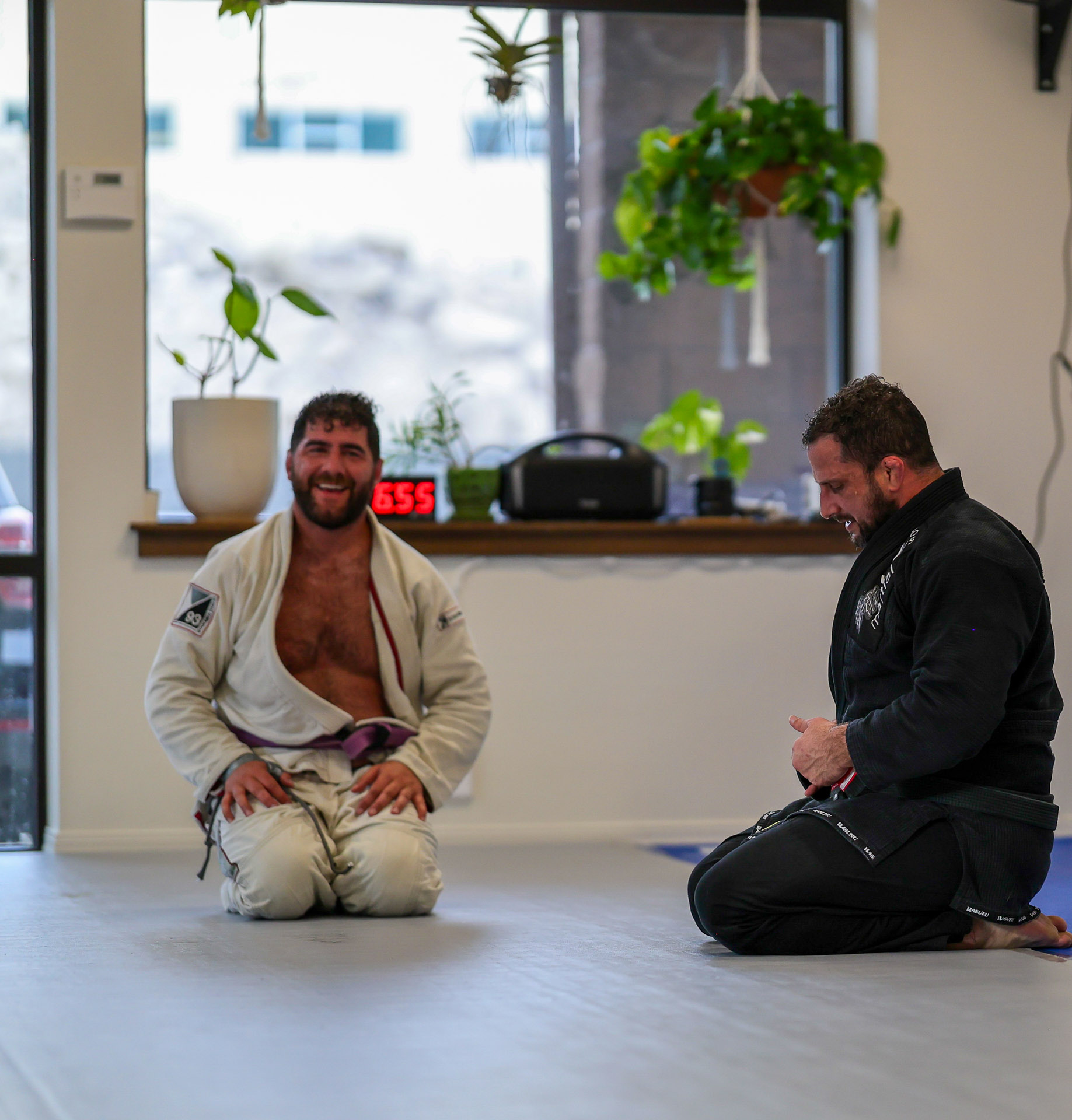
Yes. And they were all beginners once too. Here's what the room actually looks like: accountants, parents, college students, software engineers, and people in their 40s who haven't done anything physical in years. Nobody is trying to prove anything. You belong here before you've done a single thing right.
"I need to get in shape first"
You don't get in shape first and then come to jiu jitsu. Jiu jitsu is how you get in shape. Show up as you are.
"I'll slow everyone down"
New training partners make the room better. Experienced grapplers get to practice patience, calibration, and parts of their game they can't work on with each other.
"What if I look stupid?"
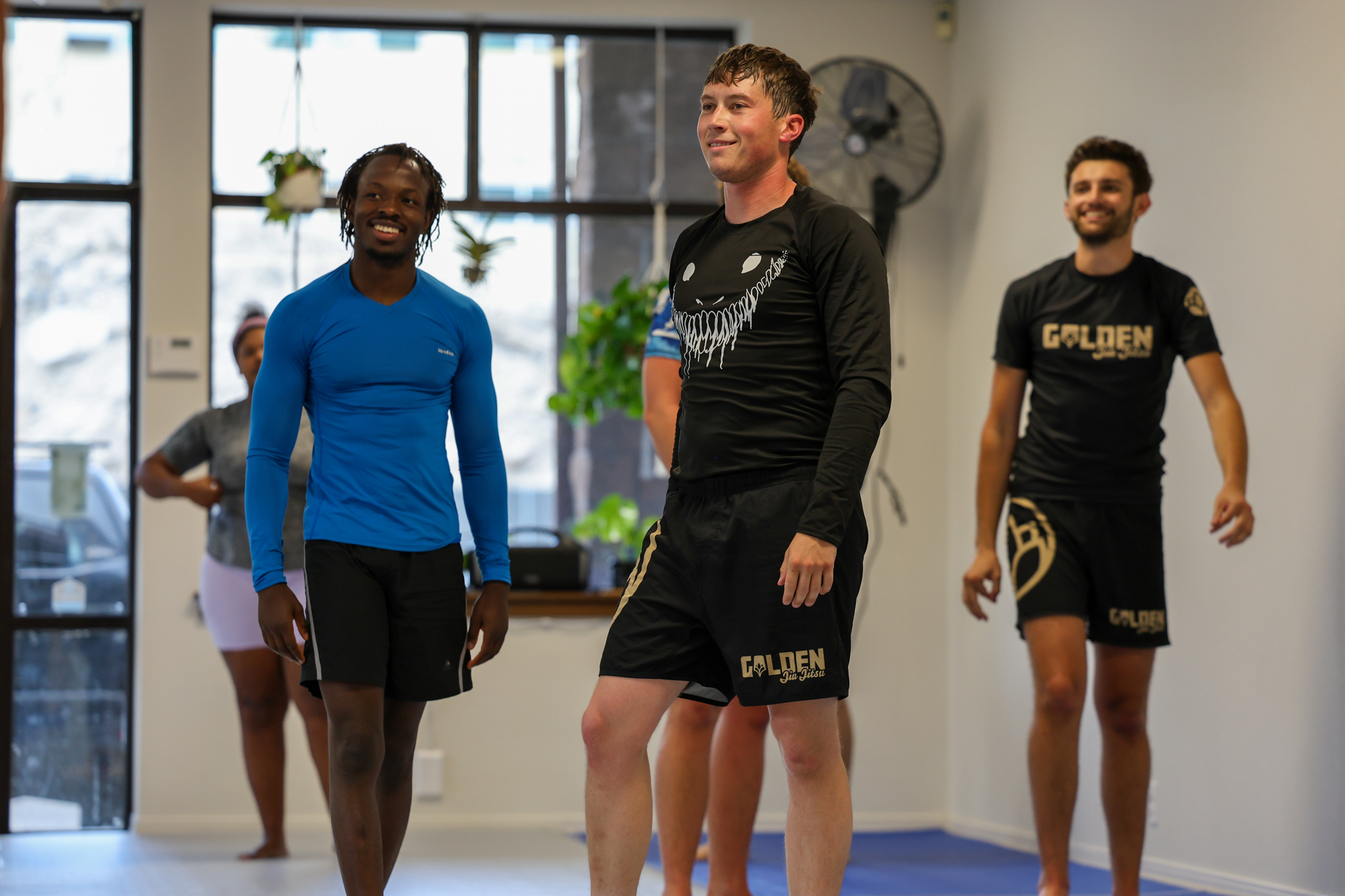
You will. Everyone does at first. Nobody here cares. We care that you showed up.
Still not sure? Keep reading.
No pressure. This page exists so you can learn everything before you ever walk in.
What Actually Happens in Class
Here's the play-by-play of your first visit.
You walk in
A coach will greet you at the door, introduce you to the group, and pair you with a training partner who knows the format. You won't stand in a corner wondering what to do.
You play games
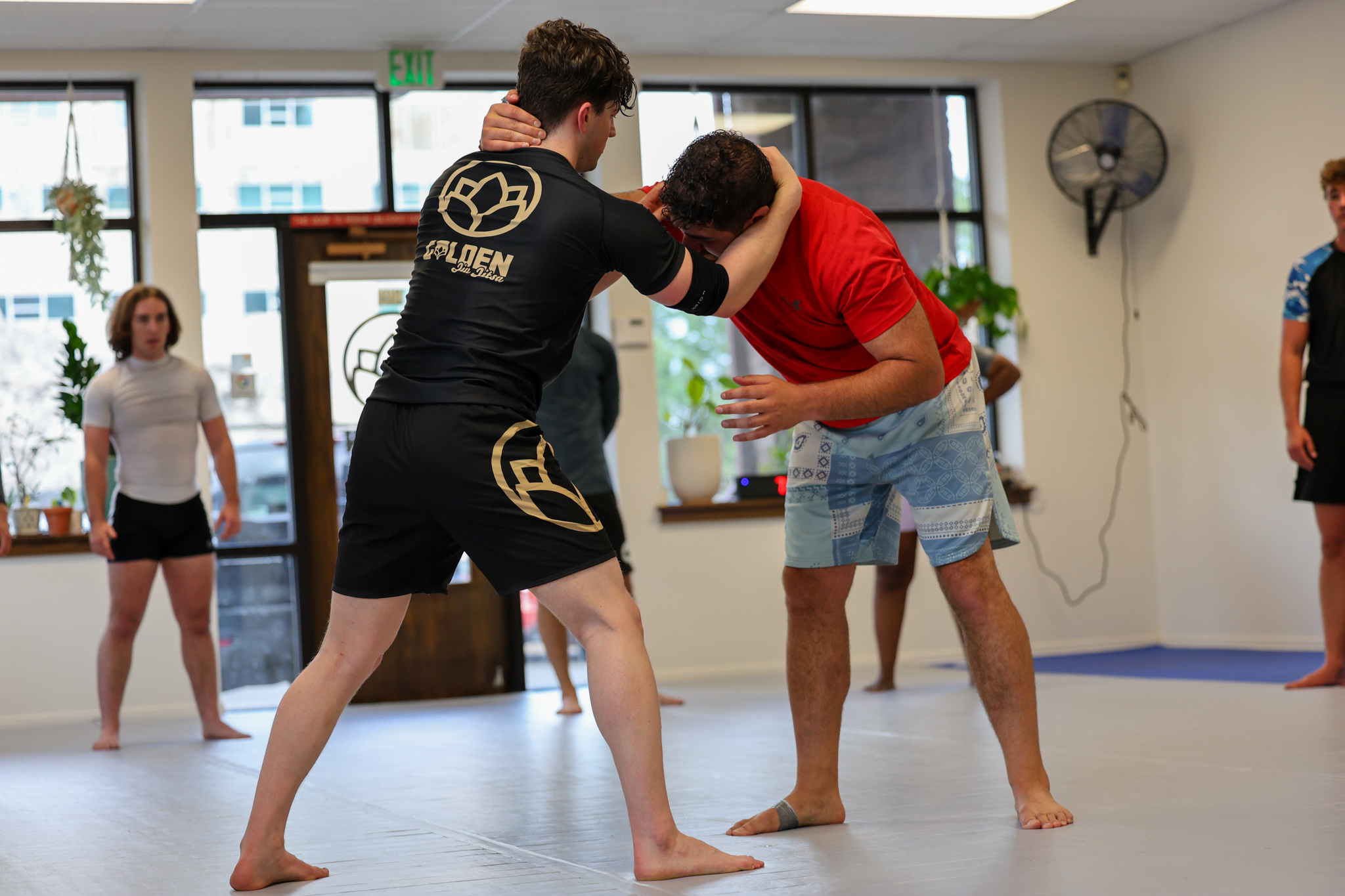
Classes are built around structured grappling games with rules, starting positions, and goals. You don't need to memorize techniques. The games teach you by playing.
You will lose. A lot.
That's the plan. Losing is how you learn here. Our members know to keep things playful with new people. Your job is to try, tap when you're caught, and ask questions.
You leave wanting to come back
The most common thing new members tell us: it was way more fun than they expected. The soreness hits the next day. So does the urge to come back.
They Were in Your Shoes
Real reviews from our members on Google, where we hold a 5.0 rating.
" I've been training here for almost a year and a half, and this gym exceeded my expectations. It's a smaller gym with a supportive, fun, and welcoming atmosphere. "
Zoe G.
Training here 1.5 years
" The students here have a great sense of camaraderie, supporting each other while pushing the pace. If you're looking for a place with great energy and a welcoming, chill environment, this school is definitely worth visiting. "
Sherry N.
Google review
" Dropped in on a work trip, and loved training with these guys! Professor Avery is super knowledgeable and has an awesome approach to teaching. Give this place a shot! "
Tim
Dropped in while traveling
Why You Won't Feel Lost
If you've watched jiu jitsu online, our classes will look different from what you've seen. Here's why that's a good thing for you.
Games, not drills
You learn by playing, not by memorizing steps. Even on day one, you'll be doing real grappling with a real training partner.
You get paired with someone
A coach assigns you a training partner who knows the format and knows how to work with new people. You don't have to figure anything out alone.
Both sides of every position
You'll practice attacking and defending, passing and guarding, pinning and escaping. You won't spend class getting dominated without learning why.
Experienced members handicap themselves
In many games, skilled players deliberately limit their own options to keep the game competitive: no using their best grips, no favorite positions. You get real practice. They work on weak spots. Both players learn.
Why Games Change Everything for Anxious Beginners
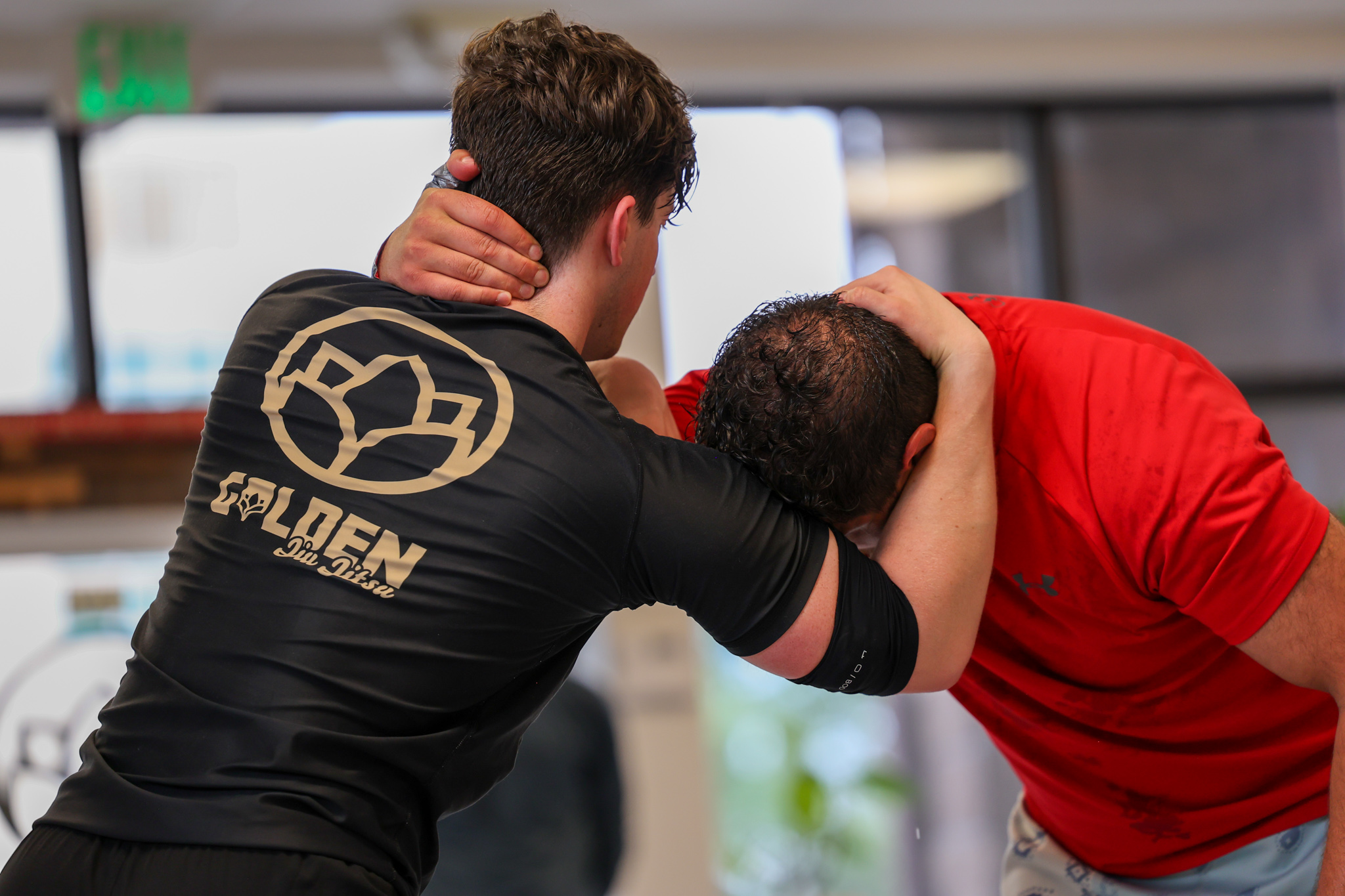
Most gyms ask you to perform. We ask you to play. That difference matters more than you'd think.
You can't fail a game the way you can fail a drill
Drilling asks you to copy a technique correctly. Games ask you to solve a problem. On day one, getting caught in a game is information, not failure. There's no wrong answer, only what happens next.
Nobody is watching you
Every person in the room is in their own game with their own training partner. There's no audience. There's no spotlight. The social pressure that kept you in the parking lot evaporates within the first five minutes.
Your partner was assigned to help you
We pair new students with experienced members whose job is to make the game work for both of you. You never have to figure out who to work with, how to ask, or whether you're bothering someone.
Losing is the whole point
In our games, the person who gets caught learns. The person who catches them learns. Everyone is losing something, and everyone is getting better. It's the only gym where losing is explicitly part of the method.
Ready to try it?
Your first class is free. No experience needed. No commitment.
What to Bring
That's it. We have everything else.
Athletic shorts
No pockets, no zippers, no velcro. Board shorts or grappling shorts work.
Rash guard or fitted shirt
A snug athletic top. If you don't have a rash guard yet, any fitted t-shirt is fine.
Slides or flip flops
For walking off the mat. No shoes or socks on the training surface.
Water and a willingness to be a beginner
That's the only prerequisite.
Still Have Questions?
What if I'm the oldest or least fit person there?
GJJ has members across a wide range of ages, sizes, and fitness levels. The format works for everyone because games scale naturally. Your training partner adjusts to you, and coaches calibrate throughout class.
Is it safe? Will I get hurt?
Jiu jitsu is a contact sport, and there is real physical risk. We manage that risk through culture: tap early, play often, no ego. Coaches actively calibrate intensity for new people. Tapping is how we keep each other safe. It's not losing. It's what lets everyone train tomorrow.
What does it cost?
Your first class is free. We offer month-to-month memberships with no long-term contract required, plus class packs and family discounts. See full pricing.
How is this different from karate or other martial arts?
Jiu jitsu is grappling only. No punching, no kicking. You learn to control positions on the ground through leverage, not strength. At GJJ, classes are built around structured games instead of line drills or choreographed forms. There's no pretending.
My kid wants to try but is nervous. What should I expect?
That's normal. We run two kids programs: Little Lions (ages 4-7) and Golden Tigers (ages 7-13). Both are built around games, development, and fun. The most common thing parents tell us: their kid actually wants to go to class. Learn more about kids programs.
Can I watch a class before trying one?
You're welcome to come by and watch. But honestly, watching is a very different experience from playing. Most people who come to watch end up wishing they'd just jumped in. The free class is zero risk.
Everyone here started exactly where you are.
Your first class is free. Or if you're not there yet, just text us.